
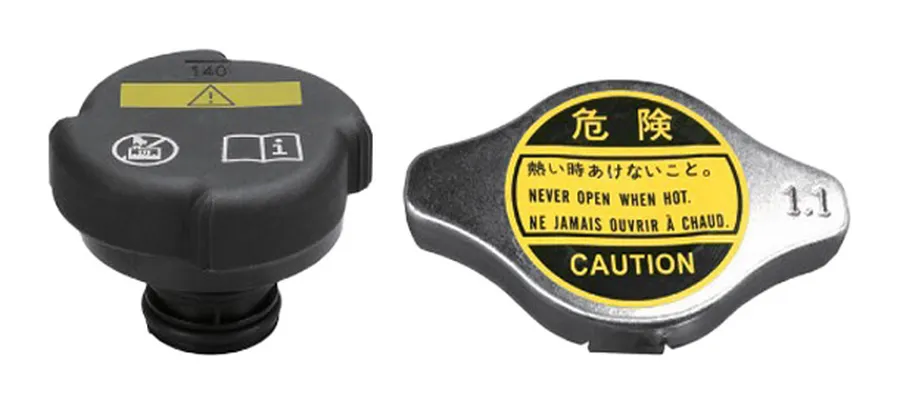
A cooling system runs under pressure on purpose: the higher the pressure, the higher the temperature at which the coolant boils, so the engine can run hotter and more efficiently without boiling. The cap is the valve that sets that pressure. Its spring-loaded seal opens at the rated pressure and lets coolant pass to the reservoir; a second, small valve lets it return as the system cools and contracts, so no vacuum forms and no hose collapses.
Caps fail quietly. The rubber seals harden and the spring weakens, the rated pressure is no longer held, and the coolant boils at a lower temperature. The symptoms look like a bigger fault: boiling over in traffic, coolant pushed into the reservoir and out of its overflow, a crust of dried coolant around the cap. A cap that has been fitted to the wrong system, with too high a rating, does the opposite and stresses every seal in the circuit.
KRONTEK caps are made to OEM-compliant quality and as aftermarket spare parts: the thread or bayonet, the seals and the pressure rating of the original cap, for radiators and for expansion tanks.
The range covers European and Japanese passenger cars. Each reference is identified by the OE number of the original part; send that number and the vehicle identification number (VIN) and we confirm the matching KRONTEK reference.
For availability and OE cross-references, contact us by email.